

How Should Sandals Fit? Guide to Sandal Fitting
4 September 2024
A well-fitting pair of sandals should sit with roughly a 1cm gap between your heel and the back edge, no toe overhang at the front, no pinching at the sides, and straps that feel snug rather than tight. Get these fundamentals right, and you'll have a pair that's comfortable from the first wear and stays that way all summer.
Sandals are built differently from closed shoes, so the usual rules of thumb don't always apply. This guide walks through exactly what to check, how to spot a sandal that's too big or too small, whether to size up or down, and how the fit changes depending on the style you choose.
In this guide:
- How sandals should fit: length, width and straps
- Signs your sandals are too big
- Signs your sandals are too small
- Should you size up or down in sandals?
- How fit differs by sandal style (wedge, heeled, toe post)
- Frequently asked questions
If you're ready to find your next pair, browse our men's sandals and women's sandals collections.
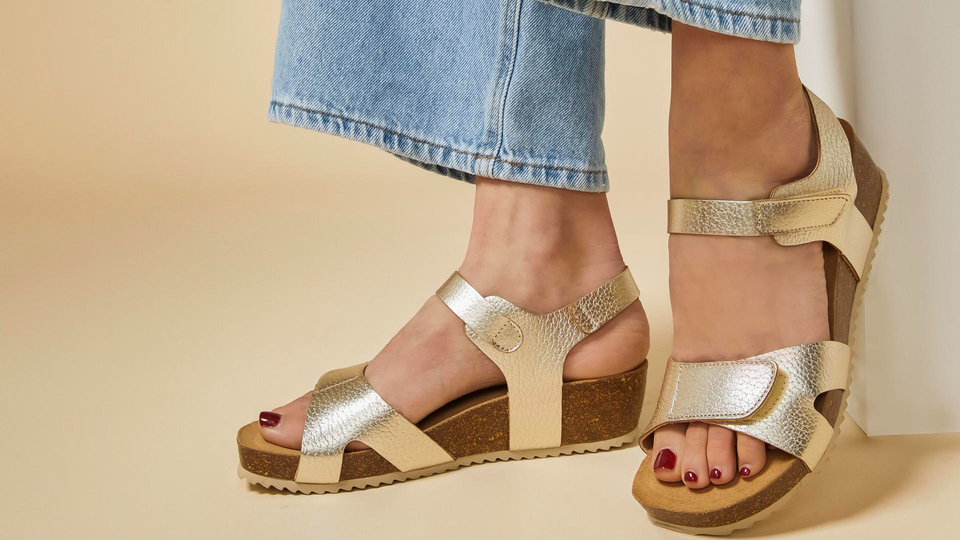
How Should Sandals Fit? The Three Key Checks
Getting the fit right matters for comfort in the moment and for your foot health over time. There are three areas to check: length, width, and straps.
Length
Your toes shouldn't extend beyond the front edge of the sandal, and there should be a gap of around 1cm between your heel and the back edge. This gives your toes room to move without leaving them exposed or unsupported.
Width
Your sandal shouldn't pinch or squeeze your foot at any point, and no part of your foot should hang over the side. A good width means the sandal follows the natural shape of your foot without crowding it.
Straps
Non-adjustable straps should feel snug but never tight. They should hold your foot securely with no discomfort and no marks left behind once you take the sandals off.
Adjustable straps let you fine-tune the fit. Use the same principles above, and remember you can loosen them slightly if your feet swell later in the day, which is common in warm weather.
Quick checklist for a well-fitting sandal:
- Toes don't extend beyond the front
- 1cm gap between heel and back edge
- No pinching or squeezing at the sides
- No overhang at the sides
- Straps are snug, not tight
- No marks or discomfort once removed
How to Tell If Your Sandals Are Too Big
A few signs point to sandals running too large:
- Excessive movement. Your foot slides around inside the sandal, or the sandal slides off your foot entirely as you walk.
- Too much space at the heel. A gap noticeably larger than 1cm at the back edge is a clear sign of a poor fit.
How to Tell If Your Sandals Are Too Small
Look out for these signs if you suspect your sandals are too small:
- Pinching or discomfort. If loosening the straps doesn't relieve the pinching, the sandal itself is too small rather than just too tight.
- Overhang. Toes extending past the front, heels extending past the back, or your foot spilling over the sides all indicate the sandal is too small.
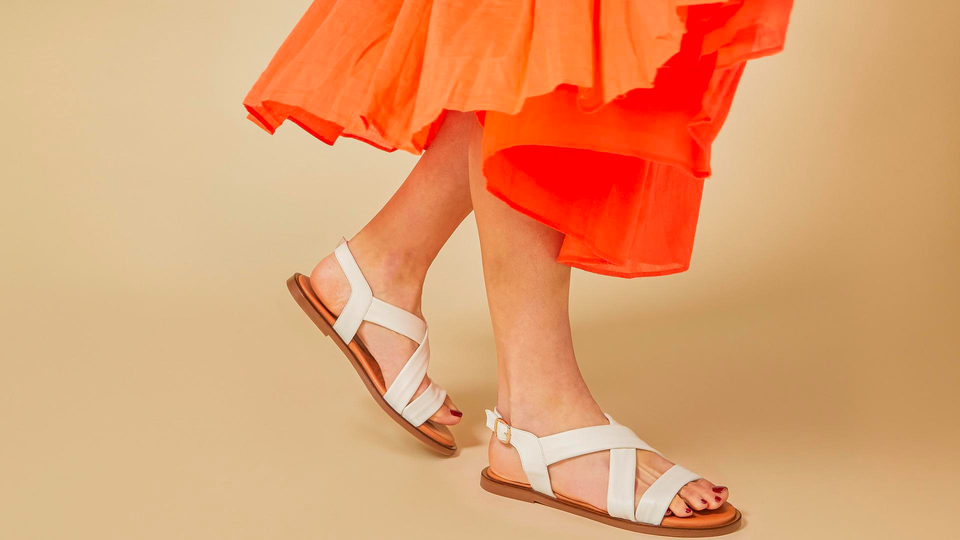
Should You Size Up or Down in Sandals?
If you're between sizes, size up. A small amount of movement or a slightly larger gap at the heel is far more manageable than tightness and pinching, which can cause blisters and discomfort over a day of wear. If your sandals have adjustable straps, tightening them slightly helps counteract any minor oversizing.
How to Tell If Your Sandals Are Too Big
If you’ve got a hunch that your sandals are big, here’s what to look out for:
- Excessive movement: your feet will slide around inside the sandal, or they may even slide off completely
- Too much space at the back: if there’s a gap of much more than 1 cm at the back of the sandal, this is a clear sign, they’re too big
How to Tell If Your Sandals Are Too Small
And here are the telltale signs for a sandal that’s too small:
- Your feet feel pinched: if your sandals are pinching you and causing physical discomfort, they’re either strapped up too tight or, if loosening the straps doesn’t fix the problem, they’re too small
- Overhanging toes: they’re also too small if your toes hang over the front, your heels hang over the back, or your foot hangs over the side
Should I Size Up or Down In Sandals?
With information about how to tell if sandals are a good fit, perhaps you’re wondering what to do if you’re between sizes. The short answer is, size up.
A little bit of movement while you walk or a slightly too big gap between your heel and the back of the shoe is less of a problem than tightness and pinching. And if your sandals have adjustable straps, tightening them a little further works well to counteract the slight oversizing.
Our ranges of men’s and women’s sandals are handpicked to ensure a wide range of fits, and are a great place to look if you need a comfortable new
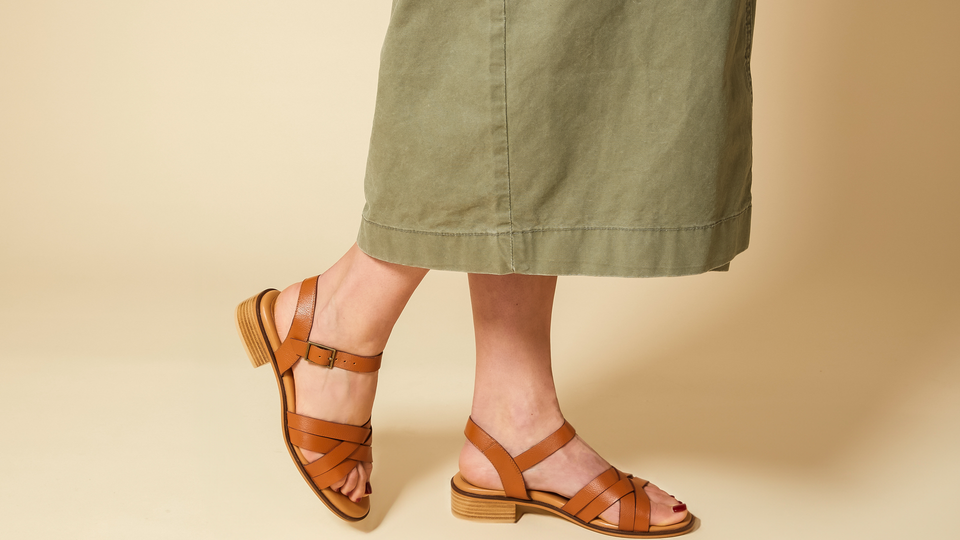
How Different Sandal Styles Should Fit
Sandals cover far more ground than the classic flip-flop, and each style comes with its own fit considerations.
How Should Wedge Sandals Fit?
A well-fitting wedge sandal should:
- Provide proper support across your whole foot, particularly the arch, with your foot sitting comfortably on the footbed
- Feel stable underfoot, with no wobbling as you walk. Instability in a wedge increases the risk of injury and is worth avoiding
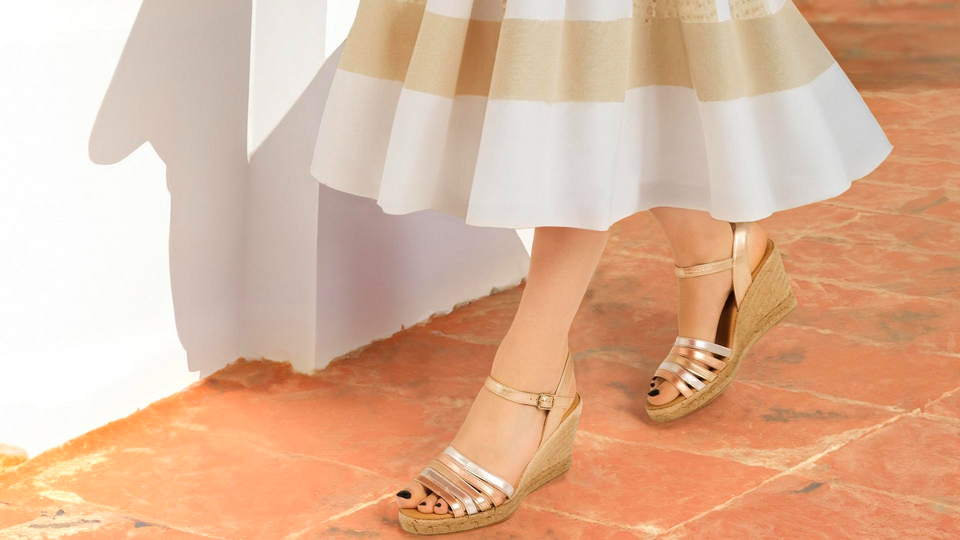
How Should Heeled Sandals Fit?
Whether it's a stiletto, block heel or clog, a well-fitting heeled sandal should:
- Sit close around the heel, with no gap between your heel and the back strap
- Hold your foot securely without straps digging in or causing discomfort, giving you both comfort and stability with every step
How Should Toe Post Sandals Fit?
Toe post sandals offer a relaxed, versatile alternative to the traditional flip-flop. To get the fit right:
- The post should sit comfortably between your toes without rubbing or irritation
- Your toes and heel should stay fully contained within the sandal, with no overhang at the front or back
Frequently Asked Questions
How much room should be in a sandal?
Aim for around a 1cm gap between your heel and the back edge, with no toe overhang at the front and no part of your foot hanging over the sides.
Should sandals be tight or loose?
Neither. Straps should feel snug and secure without pinching, and the sandal shouldn't allow excessive movement of your foot.
Is it better to size up or down for sandals?
Size up if you're between sizes. Minor movement or extra space is more comfortable than a sandal that pinches or rubs.
Do sandals stretch over time?
Many sandal materials, particularly leather, will soften and mould to your foot slightly with wear. This is a reason to prioritise correct length and width over strap tightness, since straps can usually be adjusted but the base fit cannot.
Get A Sandal on Things
A well-fitting pair of sandals makes all the difference, keeping you comfortable and injury-free whether you're dressing up or dressing down. Use the checks in this guide, and you'll be equipped to choose a pair that fits properly from day one.
Explore our full range of men's sandals and women's sandals to find your next pair.