How to Stretch Your Trainers for a Perfect Fit
10 December 2025
Everyone has a favourite pair of trainers: something comfortable, reliable, stylish, that just works. Whether it’s for your commute, the workday, exploring a city, or just relaxing at home. But when they start to feel too tight, even a short walk can leave you with sore feet and blisters. There’s good news, though; it’s easy to stretch trainers to get them feeling more comfortable again.
Whether you're breaking in a brand-new pair or going back to an old favourite, this guide will show you DIY techniques to get them comfy. It also includes material-specific advice and tips for maintaining shape after stretching. Here's what we’ll cover:
- How far can you stretch trainers?
- 6 ways to stretch tight trainers
- Stretching specific areas
- Stretching specific styles
- Maintaining their new fit
How Far Can You Stretch Trainers?
Maybe you’re wondering just how far a pair of trainers can be stretched? There are limits; you can typically stretch trainers by about half a size in width or in length. And while trainers don't offer the same give as leather dress shoes, some materials (canvas, suede, and mesh) can be coaxed into a bigger and better fit.
Bear in mind, though, that it is important to manage your expectations. Stretching won't turn a size 6 into a size 8, and overstretching can actually damage the shoe's structure.
With that in mind, if your trainers are just a little snug, here are some techniques to help you get a better fit without compromising support or style.
6 DIY Ways to Stretch Tight Trainers
There are plenty of DIY methods to try at home before turning to professional help, all of which use common household items to gradually stretch your trainers to a more comfortable fit. Here’s a breakdown of the most popular techniques.
The Thick Socks and Hair Dryer Trick
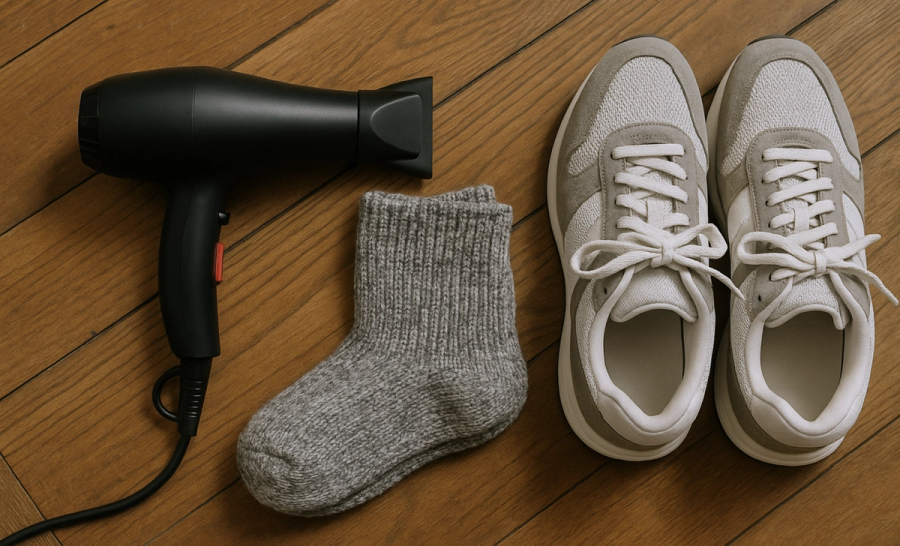
This one is great for leather trainers and synthetic trainers. Put on your thickest socks, squeeze into your trainers, and blast them with a hair dryer on medium heat for 20–30 seconds while wiggling your toes. Walk around until the shoes cool down again.
The heat helps the material loosen, and the thick socks gently stretch the interior. Repeat once or twice until you feel a difference. Please Note: Be careful not to have the hair dryer too close to the shoes to avoid misshaping them or any other damage.
The Freezer Ice Bag Method
Fill two freezer bags halfway with water, seal them tightly, and place them inside your trainers. Then pop the shoes in the freezer overnight. As the water turns to ice, it expands, which stretches your trainers from the inside out.
This works especially well for synthetic materials and canvas. Just make sure the bags are sealed to prevent leaks.
Use a Shoe Stretcher
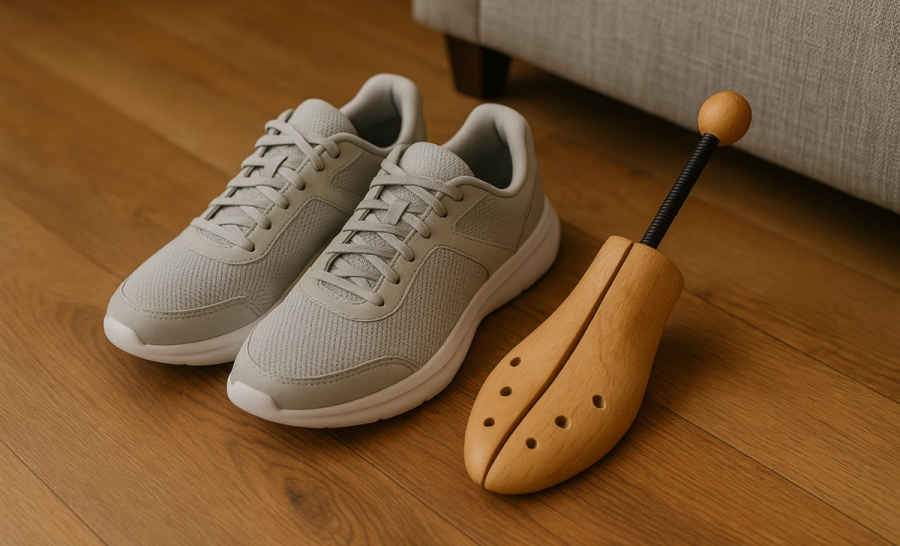
For a more controlled stretch, a shoe stretcher is ideal. These adjustable devices apply gentle pressure in specific areas, helping to stretch both the length and width of the trainer.
Use a trainer-specific stretcher or one that suits casual shoes and turn the handle a little each day until you reach your desired fit.
Stretching Spray or Rubbing Alcohol
Leather stretching sprays and diluted rubbing alcohol can help soften the material. Spray the inside of the trainer (or just the tight spots), then wear the shoes with thick socks until they dry.
This loosens the fibres and helps mould the shoe to your foot shape without damaging the outer material.
Simple Wear and Walk Method
Sometimes, all it takes is a bit of wear to get your trainers stretched out. Gradually break in your trainers by wearing them for short periods around the house.
Start with 20–30 minutes a day, increasing gradually. This lets the material adjust without forcing too much strain at once.
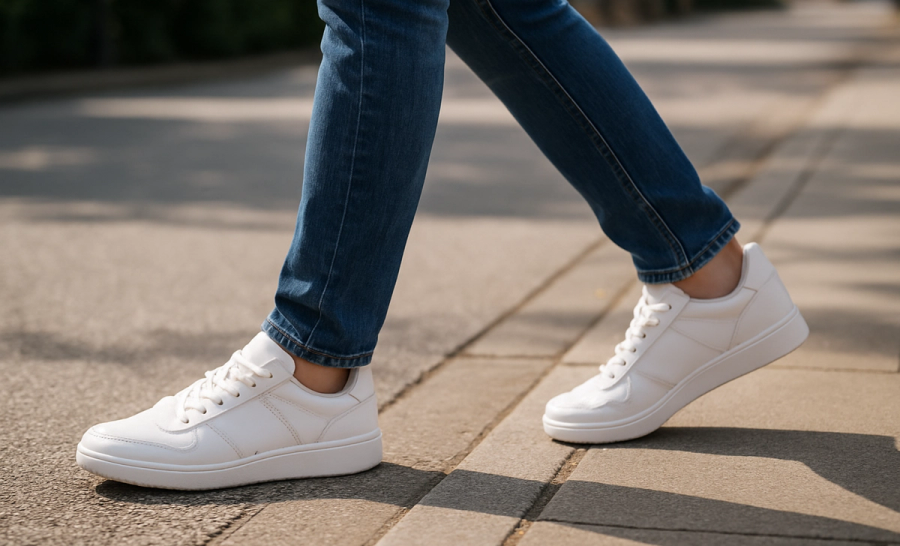
The Newspaper Stuffing Method
Crumple up damp (not soaked) newspaper and stuff your trainers tightly. Let them sit overnight. As the paper dries, it expands and gently stretches the shoe. Make sure you don’t use soaked paper, though, as it will damage your shoes.
This is a safe method for most materials, especially canvas or synthetic trainers, and is a great low-effort solution.
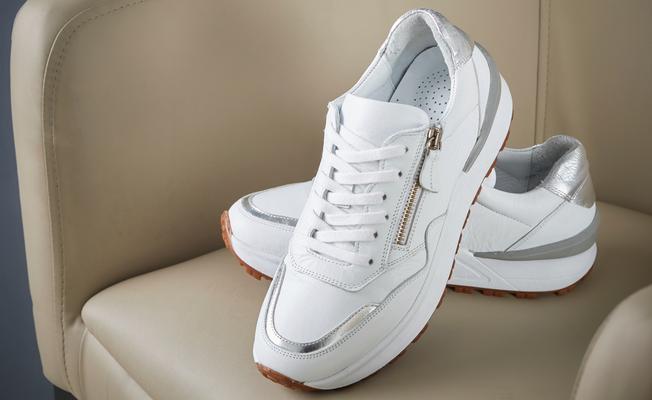
Stretching Specific Areas
Sometimes trainers only feel tight in certain areas, commonly across the toes or at the heel. In these cases, targeted stretching is more effective than stretching the entire shoe. Here’s how to focus on specific fit issues:
How to Widen Trainers
If your trainers feel tight across the sides or toe box, focus on width. Use a two-way shoe stretcher or insert a rolled-up sock in the tight area. Pair with a stretching spray for extra flexibility.
Targeted stretching like this can relieve pressure on bunions or wide feet without altering the overall fit.
How to Stretch Trainers in Length
Length can be trickier to stretch, but a one-way stretcher can help. You can also combine the thick sock and heat method with a slight heel pull to encourage forward give.
Just take care not to distort the shape; only stretch as far as the shoe allows without visible strain.
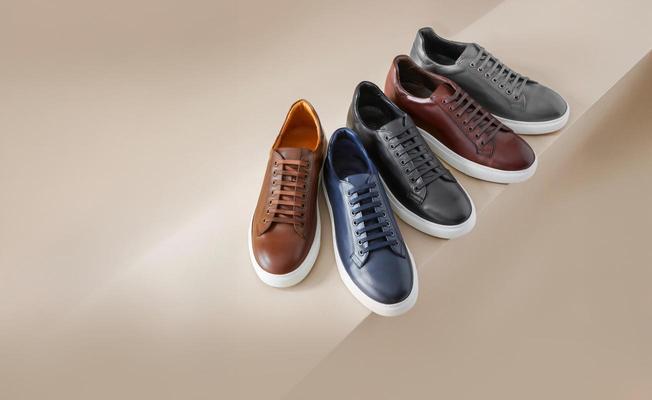
Stretching by Material Type
The type of material your trainers are made from will determine how easily they stretch and what methods are safest. Here’s a guide to material-specific stretching tips.
How to Stretch Genuine Leather Trainers
Leather offers the most flexibility. Use leather-specific stretching sprays, creams, or a shoe stretcher. Always condition the leather after stretching to maintain softness and prevent cracking.
Avoid getting too wet or overheating, which can warp the leather.
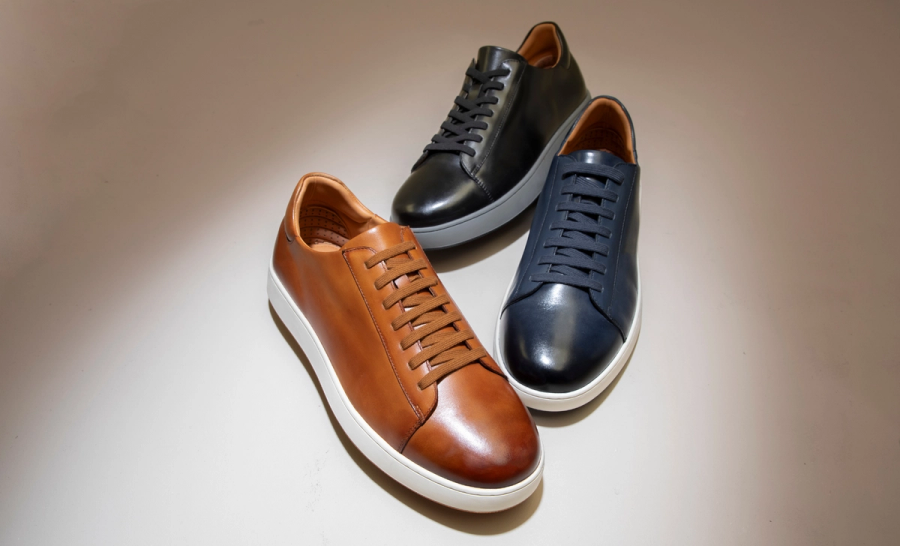
How to Stretch Suede and Fabric Trainers
Suede is more delicate. Use a fabric-safe spray and the wear-and-walk method. For fabric trainers, the freezer method and stuffing techniques work well.
Always let suede dry completely and brush it with a suede brush after stretching to restore the nap.
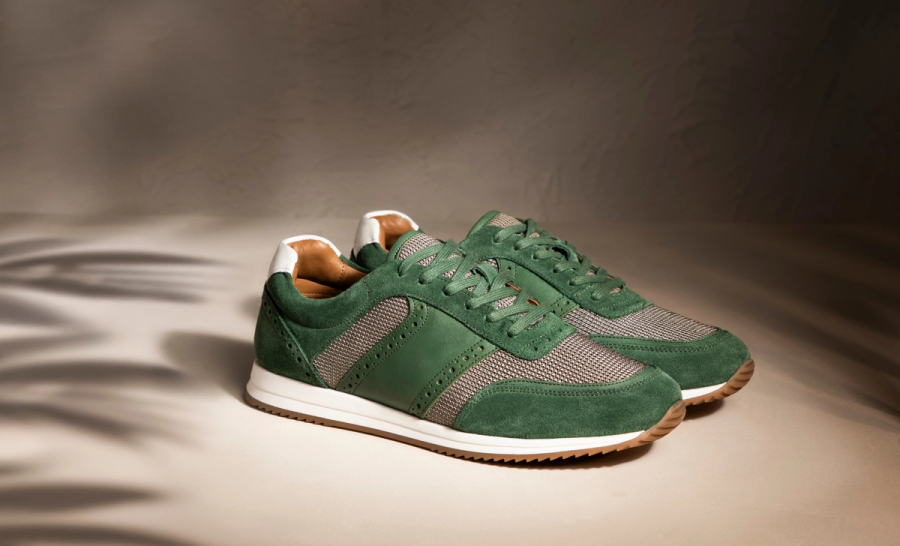
Stretching Canvas and Synthetic Trainers
Canvas and synthetics are tough and less flexible, but still stretchable. Use the hairdryer method, the ice bag trick, or newspaper stuffing. Shoe stretchers can work too, but be gentle to avoid misshaping.
Always ensure synthetic materials are completely dry before wearing them again.
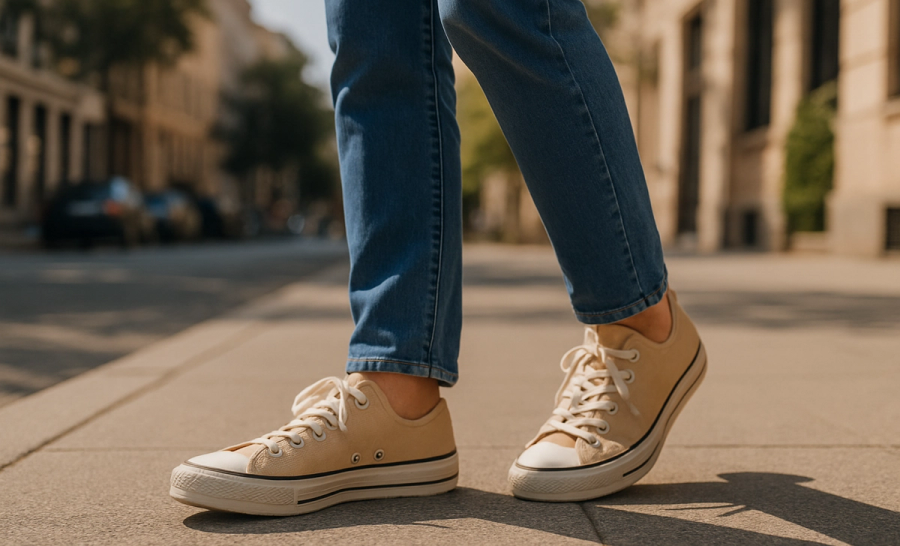
Maintaining the New Shape with Shoe Trees
Once you've achieved your ideal fit, shoe trees can help maintain it. Cedar shoe trees absorb moisture, reduce odour, and hold the trainer's shape when not being worn.
Insert them after each wear to keep your trainers looking and feeling great.
When to See a Professional Cobbler?
If DIY methods aren’t working or your trainers are expensive or made from premium materials, we recommend avoiding the risk of damaging them and consulting a professional instead.
Cobblers have tools that can apply precise stretching pressure and can even add inserts or adjust stitching for a better fit. They’re also great for stretching specific pain points or working with delicate leather.
Finding the Perfect Trainer
We’re proud to stock a wide range of trainers in all colours, sizes and styles - including wide-fit! If it’s time to retire your poorly fitting trainers, we’re confident you’ll find a comfortable, stylish fit with ease in our collection of women’s trainers or men’s trainers.
And if you’re not sure which pair to pick, pop into your nearest store for personalised advice.