

How to stretch & Soften Leather Sandals
3 July 2024
New sandals are one of summer's great pleasures, right up until the moment they start rubbing. Whether your leather sandals feel stiff straight out of the box or the straps are sitting a little too snugly, a few simple techniques are all it takes to get them fitting perfectly. No cobbler required.
In this guide, we'll cover how to stretch leather sandals, how to soften them, how to widen them, and the best ways to break them in at home, so you can get to the comfortable part as quickly as possible.
Before you begin, always check the material of your sandals and the care instructions on the label. Leather sandals can vary considerably depending on the manufacturing process and style, so while the advice below applies broadly, it is not a one-size-fits-all solution. When in doubt, follow the label.
Here's what we'll cover:
- How to stretch leather sandals
- How to soften leather sandals
- How to widen leather sandals
- 5 tips to break in sandals at home
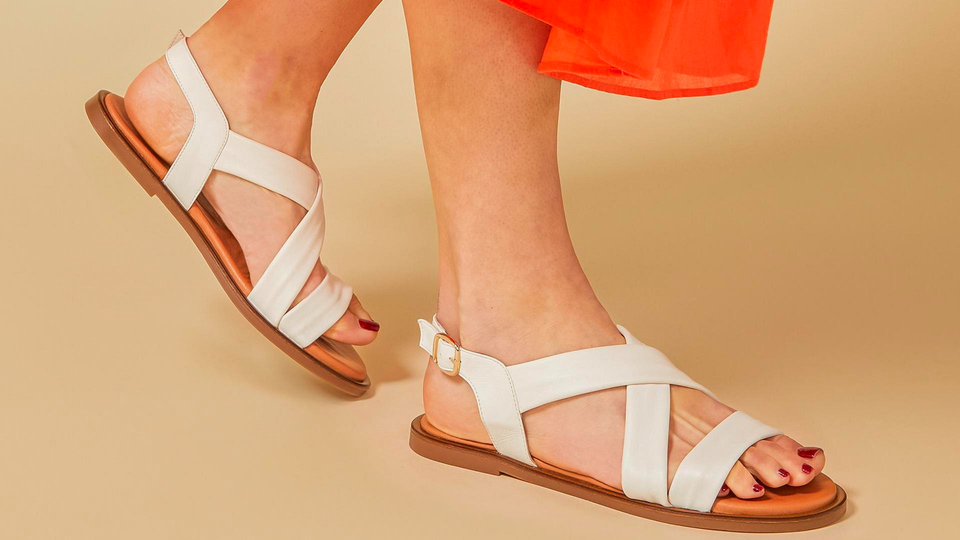
How to Stretch Leather Sandals
The good news: you can absolutely stretch leather sandals at home, and you likely already have everything you need. The key is to work gradually, different methods produce varying results, and the goal is to mould your sandals to the shape of your foot, not over-stretch them beyond repair.
Using a hair dryer to stretch sandal straps
Heat is one of the most effective tools for stretching leather, and a hair dryer makes it easy to apply in a controlled way. Here's how to do it:
- Set your hair dryer to a medium heat setting.
- Hold it at least 30cm away from the sandal straps to avoid any risk of heat damage.
- Apply heat in short, regular bursts, moving the dryer around the straps to distribute warmth evenly.
- For added effect, stuff the sandal with rolled-up socks or scrunched newspaper as you apply the heat — this encourages the leather to expand outward. Do this slowly to avoid over-stretching.
- Watch out for metal detailing. Any metal buckles or hardware will heat up quickly and can burn if touched. Keep the dryer moving and allow metal parts to cool before handling.
- Once the leather is warm but cool enough to handle, put the sandals on and walk around for a few minutes. This helps the leather mould to the exact shape of your foot while it's still pliable.
Repeat as needed until you've achieved the right fit.
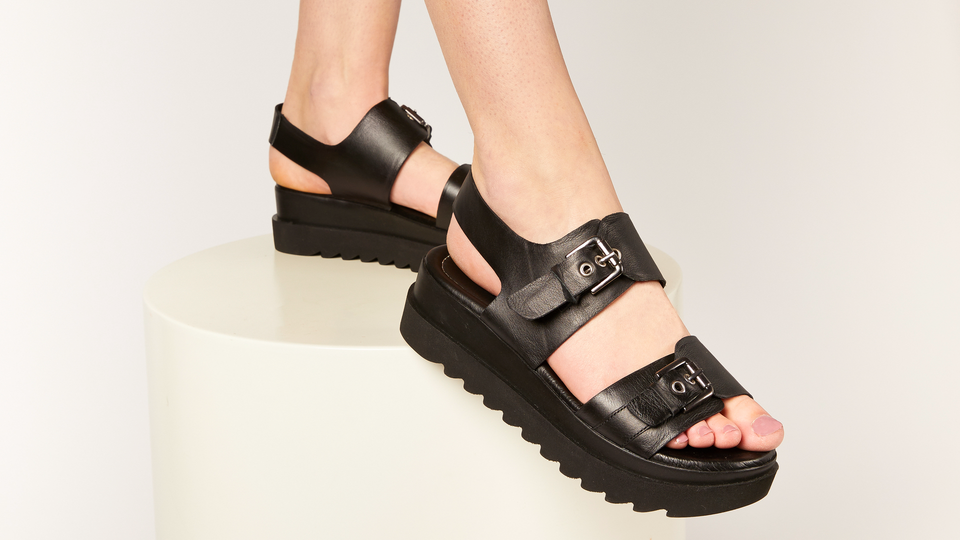
How to Soften Leather Sandals
All leather footwear is naturally stiff when new. If your sandals feel rigid or unyielding straight out of the box, a leather conditioner is your best friend.
Here's how to soften leather sandals effectively:
- Check compatibility first. Look at the care label and confirm that a leather conditioner is suitable for your sandal's specific material.
- Patch test. Before applying conditioner across the whole sandal, test a small amount in an inconspicuous spot, the inside of a strap, for instance, and leave it to dry. If there's no discolouration or damage, proceed.
- Apply with a soft cloth. Put a small amount of conditioner onto a clean, soft cloth and work it into the leather using circular massage movements.
- Be thorough. Pay particular attention to the areas most likely to cause rubbing: around the heel, across the toes, and where straps meet the foot. A little elbow grease goes a long way here.
- Allow to dry. Leave the sandals to absorb the conditioner fully before wearing them.
You may only need to do this once or twice to notice a significant difference. The result is leather that feels supple, flexible and far kinder to bare skin.
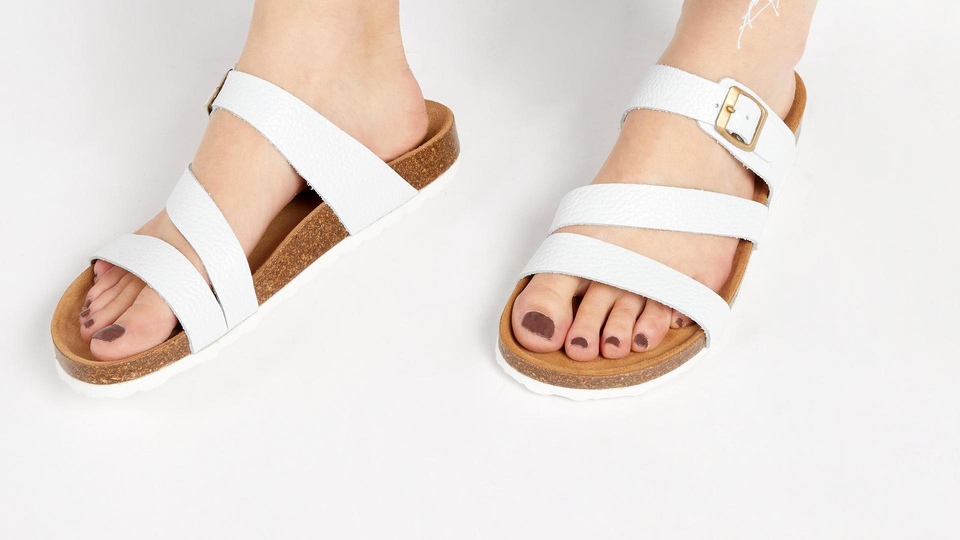
How to Widen Leather Sandals
There are two common reasons to widen a sandal: either the style runs narrow, or you have wider feet and find standard widths consistently uncomfortable. Both are entirely solvable.
Using a shoe stretcher
For widening, a dedicated shoe stretcher is the most reliable option. Insert it into the sandal, adjust it to apply gentle outward pressure, and leave it overnight. By morning, you should notice a meaningful difference in width, without any heat, water or guesswork involved.
If you regularly struggle to find footwear that fits comfortably across the width of your foot, a shoe stretcher is a worthwhile long-term investment. It works across sandals, boots, shoes and more, and effectively opens up your entire existing wardrobe.
At Jones Bootmaker, we also stock a range of wide-fit sandals designed to offer a more generous fit from day one, worth exploring if width is a recurring consideration for you.
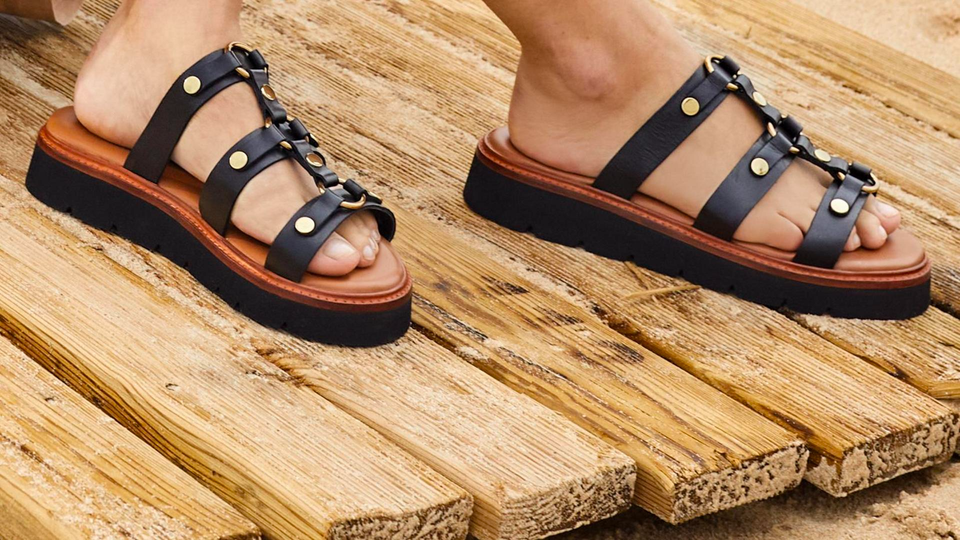
5 Tips to Break In Sandals at Home
Even after stretching or conditioning, some new sandals will still need a little time to fully bed in. Here are five tried-and-tested methods for breaking in sandals at home, without the blisters.
1. Wear them around the house
The simplest approach is often the best. Put your new sandals on for short periods around the house before committing to a full day out. This allows the leather to gradually adjust to the shape of your foot in a low-stakes environment: no long walks, no cobblestones, no regrets.
Start with 20–30 minutes at a time and build up. Within a few sessions, you should notice the fit becoming noticeably more comfortable.
2. Use the hair dryer method
As covered above, applying gentle heat and then wearing the sandals while the leather is still warm is one of the fastest ways to break them in. The leather moulds directly to your foot, meaning less time spent pacing the hallway and more time spent actually wearing them.
3. Spray sandals with water
A light spray of water on the inside of the straps can help soften the leather and make it more pliable. Put the sandals on while the leather is still slightly damp and wear them until they dry, the leather will set to the shape of your foot as it does. Don't soak them; a fine mist is all you need.
4. Wear thick socks
It might not be the most glamorous solution, but wearing thick socks with your sandals is a genuinely effective way to stretch them out. The added bulk pushes the straps outward and helps the sandal take on a slightly roomier shape. Note that this works best with strap-style sandals; toe post sandals make this approach a little trickier.
Wear them around the house for 20–30 minutes, and the leather will begin to mould outward. No heat, no tools, just your thickest winter socks doing surprisingly useful work.
5. Use leather conditioner before wearing
Applying a leather conditioner before you wear new sandals for the first time, rather than after, can get ahead of the stiffness before it becomes a problem. Softening the leather before it ever meets your foot means less friction and a faster, more comfortable break-in from the outset.
Break In Your Sandals the Right Way
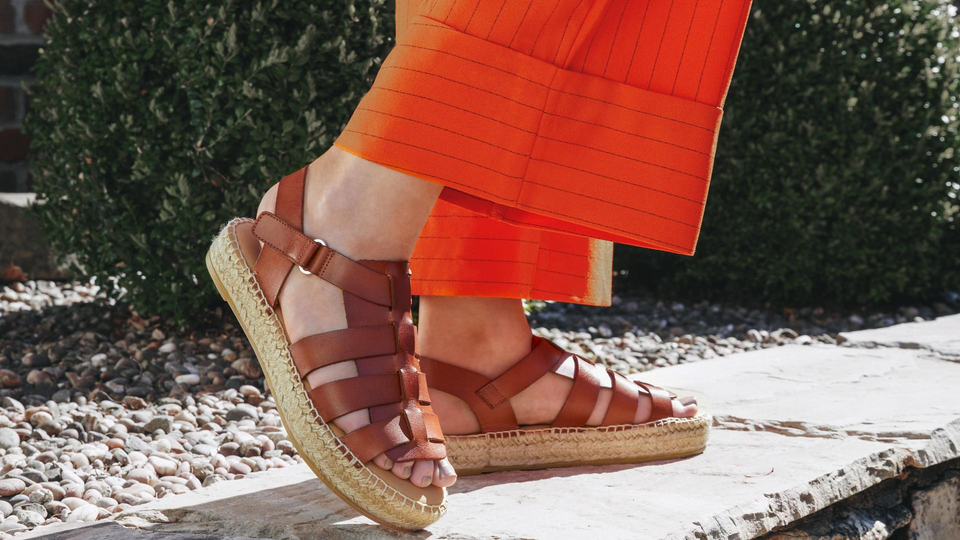
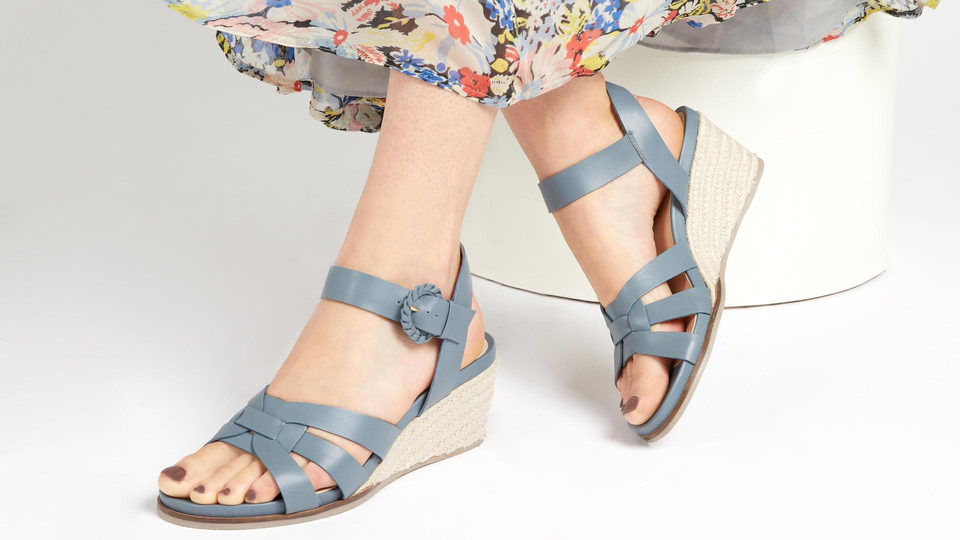
Knowing how to stretch and soften leather sandals is one of those genuinely useful life skills, and once you've got it, you'll wonder how you ever managed without it. A hair dryer, a soft cloth, a leather conditioner or even a pair of thick socks: these small investments of time and effort can transform a pair of sandals from uncomfortably stiff to perfectly worn-in.
Ready to find a pair worth breaking in? Browse our full collection of women's sandals and men's sandals at Jones Bootmaker, crafted in premium leather and built to last a lifetime with the right care.